In this article
- Why retailers usually swerve sport
- The “waistcoat theory” (and yes, I own that one)
- So what’s the M&S model?
- Aldi x Team GB: the other retailer route in
- The model works outside Professional sport too (which is often overlooked)
- A quick word on Lidl and UEFA
- Why women’s sport is sitting right there for retail
- So what should retail marketers ask before signing anything?
In the space of a few weeks M&S has announced two proper attention-grabbers: a partnership with Atlassian Williams F1 as Official Travel Kit Partner, and a multi-year deal with Silverstone as an Official Partner. People will have seen the headlines and thought: “M&S are splashing out.”
But I don’t think this is a retailer suddenly “getting into sponsorship”.
I think it’s something more interesting.
I think M&S is showing what retail sponsorship looks like when it’s built like retail, not like a rights deal. This is not just a badging exercise…
Why retailers usually swerve sport
There’s a reason you don’t see loads of retailers piling into big sports partnerships.
Retail is tough. Margins are tight. Promotions are constant. CFO’s are skeptical on marketing spend that can’t be measured in the way that performance spend can be. And let’s face it, CMO tenure is somewhere between 2-4 years so chances are making a call like this might not be one you get to see the outcomes fully from…
Unlike plenty of other categories, retailers already have the thing sponsors often want sport to deliver: Reach.
If you’ve got millions of customers walking into your stores each week (or opening your app), the question becomes:
Why commit a significant budget to sport if it’s just a logo and a hope?
That’s the bit most sponsorship sales decks still struggle to answer.
The “waistcoat theory” (and yes, I own that one)
Here’s my working theory on where M&S’s modern approach really started.
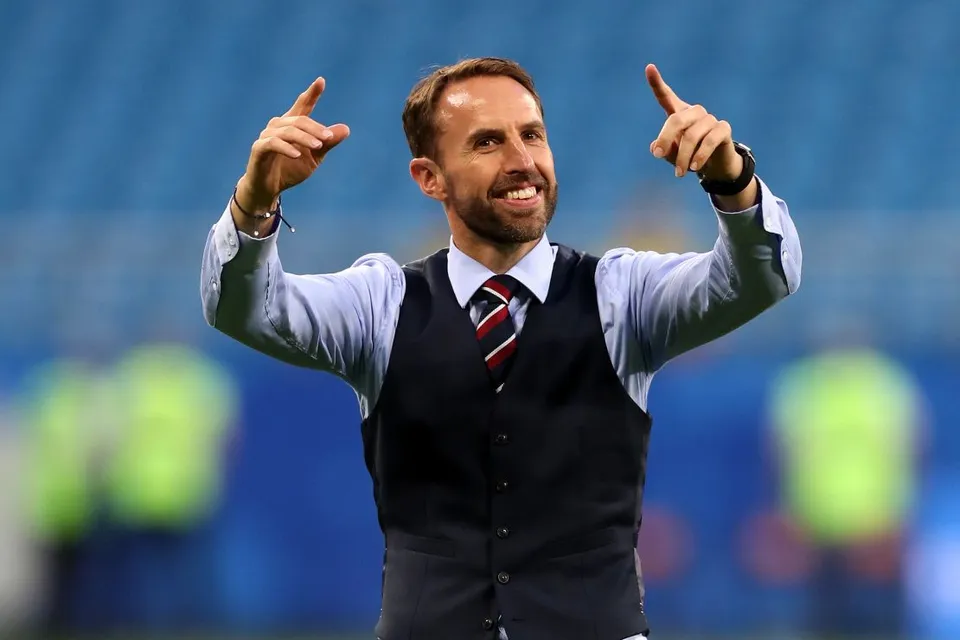
I was in Russia with the FA when the Gareth Southgate “waistcoat moment” happened at the 2018 World Cup. And if you were anywhere near football at the time you’ll remember it: a simple piece of formalwear became a cultural storyline overnight.
It was a demonstration that a retail partnership can do something genuinely valuable if it’s:
- reactive
- shoppable
- and plugged into the national conversation
M&S has been connected to England formalwear for years but that tournament was a reminder that “formalwear supplier plus one photoshoot before a major tournament” is only one version of what the relationship can be (and not a very good one IMHO)
The other version is: sport creates moments; retail turns moments into behaviour.
And yes I do own the waistcoat too…ready for this summer!
So what’s the M&S model?
Look at what they’ve done recently. It’s less “sponsorship” and more of an “operating system.
1) Cultural-fit first, sport second
F1 isn’t just sport. It’s entertainment, lifestyle, social content, fashion. It’s where a lot of younger audiences already are and it gives M&S a modern stage to show up on.
2) Product in the story, not slapped next to it
Williams isn’t a passive badge. It’s kit. It’s travel wear. It’s product on people across a global calendar, a partnership shape that makes sense for a retailer.
3) Experience that can actually convert
Silverstone isn’t just a race weekend. It’s a year-round venue and a festival-like environment on big weekends. That’s perfect retail territory: theatre, sampling, content, hospitality, reasons to act now.
4) Use the unfair advantage: owned channels
This is the bit retailers can do better than almost anyone: stores, apps, email, screens, CRM, retail media. Sport can supply the attention, but retail controls the conversion pathway.
So rather than “brand exposure”, you get a loop:
- Relevant Attention
- Proximity to Action
- Repeat & Loyalty built-in
Aldi x Team GB: the other retailer route in
M&S is one blueprint. Aldi x Team GB is another. Different positioning, same principle.
They wanted to demonstrate their commitment to Britain, to British sourcing and to show that their fresh products were as good, if not better, than any other British Supermarket.
Marketing Director at the time Adam Zavalis said “we wanted to demonstrate real credibility so alongside the headline sponsorship, we gave every single member of Team GB’s gold squad (around 800 Olympic potential athletes), £25 a month to spend on Aldi’s fresh meat, fish and produce. If Britain’s best athletes were fuelling their Olympic training with food from Aldi then it showed it was good enough for families all over the country."
Aldi’s partnership works because it gives them permission to talk about more than price: trust, wellbeing, families, community then bring it to life in-store and through programmes people can join in with like the Nutrition education programme for kids 5-14.
The results; fresh produce sales up 19% YOY with a record £289m (Source: The Grocer) – that’s a whooping c. £55m in uplift for a sponsorship fee + activation that I estimate was probably around 10-20% of that…
The model works outside Professional sport too (which is often overlooked)
Here’s what I think a lot of people miss…you don’t need elite rights to do a retailer-grade partnership. Co-op x Parkrun is a brilliant example. It takes the same retail logic and points it at participation:
- a regular habit moment (Saturday)
- a simple customer mechanic (scan / member action)
- a reward that drives store trips (vouchers/offers)
- content that turns it into a basket (recipe-led prompts)
And even better…it’s linked into a contextualised "shopping moment" as how many people will pop to the shops post run to do a quick weekend shop; ideal for Co-op.
A quick word on Lidl and UEFA
When I was at the FA, Lidl were an England Football partner and had some similar approaches to the Aldi x Team GB approach but with a focus on FA Skills (5-11 yrs old offer). Lidl’s then moved into UEFA properties which is interesting and it’s a good reminder of a trade-off.
Pan-European rights can be powerful. But they also usually come with a significant budget commitment, and they can become centrally driven. Which means the real question is often:
Does it land locally, in-store and in the app, in a way customers actually notice - can't say I've seen much so far but with UEFA finals to come soon let's see...
Because if the translation doesn’t happen, the rights might be “bigger” on paper but feel smaller on the shop floor. That’s not a dig it’s just a retail reality: ROI is built in activation.
Why women’s sport is sitting right there for retail
If retailers want cultural relevance with community permission and a clearer line to real-world behaviour then women’s sport could be the answer.
Women’s Sport Trust, led by Tammy Parlour MBE, research suggests women’s sport sponsorship now reaches over half of UK adults (28.9m people), and it links sponsorship to strong brand impact. Industry reporting on the same research highlights a useful headline for retail: around 30% of consumers say they feel more favourable towards brands sponsoring women’s sport, versus around 20% for men's.
Of course It’s not just about growth curves. It’s about fit:
- values
- community
- participation pathways
- the chance to build something that looks like a modern retailer partnership (not an old sponsorship template)
If you’re trying to earn trust and modernise at the same time, it’s hard to think of a better platform.
So what should retail marketers ask before signing anything?
This is the bit I keep coming back to and has been the focus of some recent conversations with some leading CMO’s in the space…
Retailers haven’t “left” sport. They’ve left sponsorship that behaves like sponsorship.
The best partnerships today are built like retail:
- can it become a shoppable story quickly?
- can it run on a weekly/high frequency mechanic?
- can stores actually execute it?
- can we measure incrementality, not just impressions?
BAZBALLERS CONSULTING LTD have turned those into a simple one-page scorecard to pressure-test ideas before anyone commits serious budget.
If it’s helpful, I’m happy to share it.
Because this is not just sponsorship. This is M&S sponsorship.
First published on LinkedIn on 5 Apr 2026. Read the original
Russell James
Founder of Bazballers. Formerly Marketing Director at The FA, Sales and Marketing Director at the ECB, and ten years at P&G.
More about Russell