Everyone is talking about the football World Cup (me included!) Nike, Adidas, Paddy Power...we are seeing some seriously impressive activation – hopefully the football is as good.
But while most of the sponsorship conversation will naturally get pulled towards football, there is another World Cup on the horizon that smart marketers should not overlook: the Women’s Cricket World Cup – which starts Friday 12th June in England!
The real story here is simply that women’s sport is “growing”.
I think it is becoming one of the clearest tests of whether a brand is building something meaningful, or just renting attention. That broader challenge is not unique to women’s sport, of course. It is where a lot of sponsorship thinking has landed full stop: the rights fee is the entry ticket, and the real value gets built in what the brand does with it afterwards.
That’s why, for me, the most interesting takeaway from the Women's Sport Trust “Consumer View” report is not visibility. It is consideration.
Read more on womenssporttrust.com ↗
The underplayed story in the data is that women’s sport sponsorship can drive strong affinity and consideration even when awareness is still developing, and that creativity, relevance and authenticity can outperform scale. That should give brands more confidence to use women’s sports assets inside their own activation systems rather than sitting back and relying on the property to do all the work. In other words, the rights are the starting point, not the finished article.
That is also why I keep coming back to O2 and the Red Roses as probably the clearest recent UK example of a brand actually winning in women’s sport.
O2 (Telefónica UK) did not just back a rising property and hope for the best. The stated job was to increase the profile of the Red Roses, recruit new fans and improve attractiveness and consideration for the brand. The partnership was then brought to life properly: parity in marketing spend, content, ticketing, live experience and a record crowds at Twickenham. That feels like a much better blueprint for brands looking at women’s sport now. Not passive support. Active value creation.
Cricket is a very good lens for that right now.
The Women’s Cricket World Cup will create the obvious moment. But the bigger opportunity sits around the ecosystem forming beneath it: the event platform, the league platform, the athlete platform and the grassroots & pathway platform.
Metro Bank (UK) is a great example of that, when it is done properly. When Danielle Lee and I first came together (when I was at the ECB) we centred on the purpose of the partnership to champion women’s and girls’ cricket across all formats, from the elite to the grassroots, with a Women’s and Girls’ Fund at the heart of it to attract and retain more women and girls in the game. The Girls in Cricket Fund is driving transformational growth in girls’ recreational cricket.
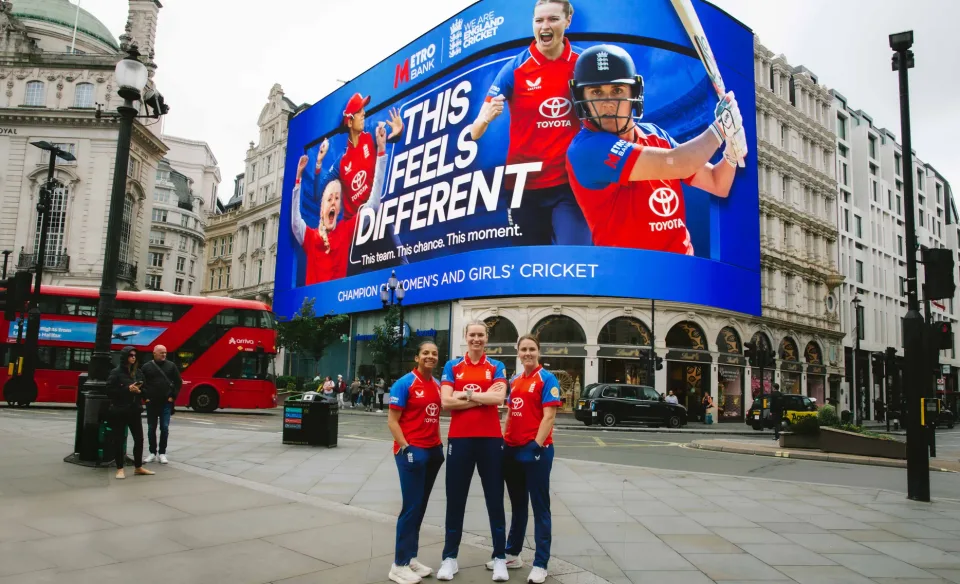
What I like about the Metro Bank example is that it is not just grassroots intent tucked away in a CSR deck. It is also showing up in market with real confidence. This week, Nat Sciver-Brunt, Lauren Bell and Sophia Dunkley appeared on the Piccadilly Lights as part of Metro Bank’s “This Feels Different” campaign, with Metro Bank and the ECB positioning it as a visibility push for women’s and girls’ cricket ahead of the summer.
That is the point. The smartest brands in women’s sport are not choosing between helping build the game and building brand fame. They are using one to strengthen the other.
The WST data backs that up too. Metro Bank’s England Women’s cricket / Women’s Ashes partnership was one of the stronger performers on affinity among those aware of it. Again, that is the bit that matters. Women’s sport is not simply asking brands to badge the occasion. It is giving them permission to get closer to growth, community and customer choice.
You can also see the market moving in the types of brands now entering women’s sport.
Airbnb’s new WSL partnership is a good example. The headline is not just the brand name. It is the £1 million Player Accommodation Fund, set up to support players through transfers and short-term relocation. That is a sponsor stepping into a real friction point in the sport rather than just buying a perimeter board and calling it a strategy. Hat tip to Kirsty Mullan and team who clearly understand the playbook.
And in women’s cricket, the Women’s Premier League has continued to attract newer categories and newer signals of demand. Reporting around the 2026 and 2027 WPL commercial agreements said ChatGPT joined as a Premier Partner as part of a broader sponsorship uplift for the competition. Whether you look at that through a commercial lens or a cultural one, it is another sign that women’s sport is no longer only drawing the traditional sponsor set.
Then there is the athlete piece, which may be where this gets most interesting of all.
Lauren Bell (she's in the middle of the photo) is a very good example of what women’s cricket can now create at individual level. She gained one million Instagram followers in a week during the WPL. Women’s cricket is not only producing tournament audiences now. It is producing athlete platforms with real individual commercial gravity.
Athlete partnerships in women’s sport are not just endorsement plays. They can become vehicles for relatability, routine, aspiration, identity and community. The WST work makes a similar point: athlete partnerships can be especially powerful in building emotional connection and consideration.
And this is where I think brands still risk being too narrow.
If the Women’s Cricket World Cup is the obvious moment, it should not be the only lens.
Because moments are not the same as systems.
The longer-term value in women’s sport sits deeper in the places where participation becomes habit, where confidence is formed, where identity is shaped and where future fandom gets built. That is why I think BUCS is such an interesting opportunity.
Not because it is “student sport”.
Because it sits at a really important life stage.
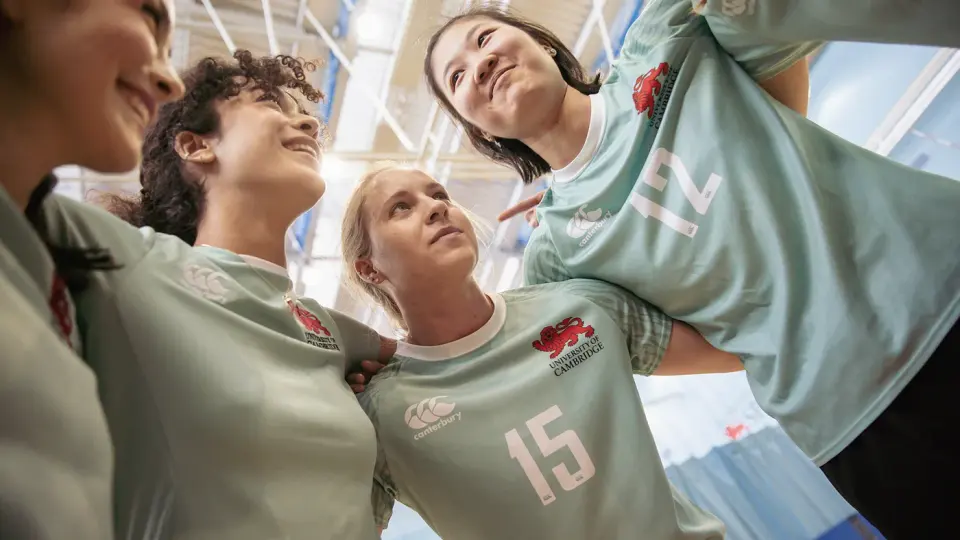
British Universities & Colleges Sport (BUCS) as the largest Gen Z multi-sport property in the UK. The platform is about participation, storytelling and community, and around shaping sporting behaviour at a pivotal moment. Universities a rare high point for women’s participation. Which means BUCS is not just hosting sport. It is sitting at the point where women either build a relationship with sport for life, or lose it.
That should be commercially interesting to more brands who move fast. (please get in touch!)
Because if you are a CMO thinking about consideration, future customers, future employees, trust, belonging, local relevance or behaviour change, then women’s sport is not just an awareness play. It is one of the few parts of sponsorship where brands can still get properly involved. Not in a forced way. Not in a “shared values” way that gets retrofitted after the deal is done. In a genuinely useful way. That objective-first, audience-first logic is also exactly how the best partnership models now get built: around clear audience roles, measurable outcomes, and activation routes that go beyond traditional inventory.
That is what O2 understood with the Red Roses. It is what Metro Bank is showing in cricket. It is what Airbnb is now signalling in the WSL.
And it is why I think the Women’s Cricket World Cup matters, even beyond the tournament itself.
It is not just a big event. It is a reminder that women’s sport is becoming one of the best places to test whether a brand wants to merely show up, or actually help build something.
This is Episode 3 of "The Scoop" from BAZBALLERS CONSULTING LTD - for previous episodes please search here: Episode 2: Read on LinkedIn
Episode 1: Read on LinkedIn
At Bazballers, we spend a lot of time thinking about where sponsorship can create real commercial value; for brands, for rights holders and for the audiences they are trying to reach. Women’s sport is increasingly one of the most interesting places to do that.
First published on LinkedIn on 7 Jun 2026. Read the original
Russell James
Founder of Bazballers. Formerly Marketing Director at The FA, Sales and Marketing Director at the ECB, and ten years at P&G.
More about Russell